
The enterprise Contact Centre as a Service (CCaaS) market is undergoing its biggest structural shift in more than a decade. For years, traditional vendors have held a grip on customer experience (CX) budgets, charging, per-seat licensing fees for dedicated application suites.
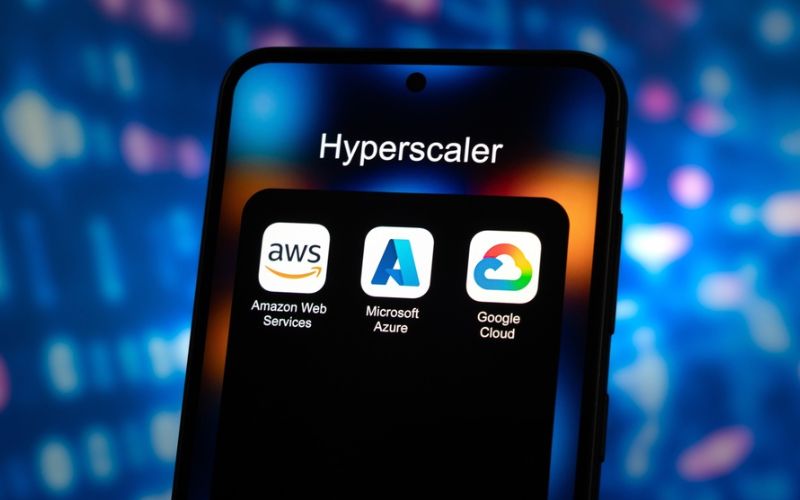
That model is now being dismantled. Hyperscalers, Amazon Web Services (AWS), Microsoft, and Google Cloud, are no longer just hosting customer service tools, they are swallowing them whole. By shifting procurement away from standalone software features and toward holistic enterprise data, cloud infrastructure, and AI orchestration, hyperscalers are forcing incumbent CCaaS vendors to justify their high per-seat premiums.
The shift to broader IT decisions
Traditional CCaaS vendors are no longer merely competing against one another for the attention of contact centre operations managers. Instead, the contact centre is being absorbed into broader enterprise technology decisions led by the C-suite.
As highlighted in the 2026 APAC Contact Centre CX Platforms with AI Buyers Guide, enterprise buying behavior has fundamentally flipped. The real buying power has moved to Chief Information Officers (CIOs), Enterprise Architects, and AI Governance teams.
Audrey William, Founder and Principal Analyst at CrayonIQ, comments, “Standard CCaaS vendors need to stop just selling agent seats. Seat and licence pricing will remain relevant for human-agent capacity, but it cannot be the centre of the AI narrative they want to build on. For large enterprises, the crowd in the room now is your CIO, your Chief AI Officer, your Enterprise Architects, and mate, even the Chief Risk Officer. You’ve got to sell them on full business AI orchestration, enterprise-grade control, managing risk and governance and real, measurable outcomes. Shift the chat to platform capabilities, not just the app layer, AI is the intelligence layer driving the lot now.”
For enterprise IT leaders, hyperscalers hold an inherent advantage: the ability to seamlessly blend advanced generative AI, vast data lakes, and enterprise-grade security within a pre-existing cloud footprint. When an organisation already relies on a hyperscaler for 90% of its IT infrastructure, layering contact centre capabilities on top becomes a logical extension rather than a risky new software procurement.
The hyperscaler hack, composable vs per-seat
Hyperscalers like AWS (via Amazon Connect) are actively undermining traditional CCaaS pricing strategies. Where legacy vendors charge organisations in rigid per-seat licenses, charging $150 to $300+ AUD per seat every month regardless of agent utilisation, hyperscalers lean into consumption-based pricing. Businesses pay strictly per voice-minute or per API request via tools like Amazon Lex, Bedrock, and Google Dialogflow.
William comments, “Most CCaaS vendors are still stuck charging per agent seat, but that model’s shifting, AI cuts right across the whole enterprise now. The buyers are now increasingly exploring the outcome as a service model. There are many definitions out there as to what constitutes this model. The real trick with outcome-based pricing is proving the value to the CFO. Are you charging for the second handoff while the first one’s free? What does pay per resolution entail? At the end of the day, boardrooms are asking for a clear five-year forecast on their AI spend. Traditional vendors must pay attention here if they want to stay in the game.”
The build vs. buy equation
Abandoning a turnkey traditional CCaaS platform for a hyperscaler’s composable stack comes with distinct trade-offs.
| Dimension | Hyperscaler Platform (Composable) | Traditional CCaaS Platform (Out-of-the-Box) |
| Pricing Structure | Pure consumption (per-minute, per-request) | Rigid per-seat, per-month licensing |
| Speed to Deploy | Requires custom engineering and setup | Fast, plug-and-play out of the box |
| Operational Control | Full flexibility over LLMs, routing, and workflows | Constrained by vendor roadmap and native feature set |
| Resource Dependency | Requires DevOps, cloud architects, and data engineers | Managed directly by CX leads, QA, and ops managers |
| Security & Governance | Fits directly into existing cloud data residency policies | Requires auditing a third-party vendor’s data pipeline |
The enterprise case for hyperscalers
For large-scale, highly regulated operations, the hyperscaler argument is formidable, as William points out, “When you get into massive enterprise environments, think Tier 1 banks, major airlines, or big telcos, the contact centre is just one slice of a massive pie. If 90% of your heavy lifting is already sitting on AWS, Azure, or Google Cloud, the C-suite is naturally going to lean toward their existing hyperscalers. At that scale, it’s all about risk, data sovereignty, and tight governance. When the board asks who’s actually seeing their data during an AI handoff, keeping the lot under one proven cloud roof gives them the control and predictability they need.”
However, that power comes at a cost,”Hyperscalers bring the absolute shiny stuff, cutting-edge features that get the tech team’s eyes popping. Plus, having your voice AI, data, and analytics all under one cloud roof slashes latency, tightens security, and satisfies those tough governance questions from your Chief Risk Officer. But here’s the catch: it’s engineering-heavy. You need a swarm of DevOps teams and cloud architects just to launch it, and the consumption pricing can give you some right nasty surprises when usage spikes.”
The turnkey appeal of legacy CCaaS
Conversely, traditional CCaaS vendors retain a strong value proposition for mid-market buyers or large enterprises with lean IT teams, William highlights, “The real beauty of standard CCaaS vendors is that they’re less complex and easier to get up and running straight out of the box. You’re getting all your core features, like workforce management, gamification, and QA, without needing a massive army of IT devs on standby. Your business analysts, CX leads, and operations managers can jump right into the driver’s seat and design workflows themselves. It’s simple, it’s fast, and it just works without the technical overhead.”
The role of channel partners and architecture
This platform war is fundamentally shifting the role of system integrators, resellers, and channel partners. Flipping software licenses for a margin is no longer a viable business model. “If you’re a channel partner, simply reselling software and flogging basic managed services isn’t going to cut it anymore, you’ll get left in the dust. Partners need to build their own IP that sits right on top of vendor platforms. AI deployments are getting complex, so change management, risk and governance expertise are some of the critical skills to bring to the table. This explains why the GSI’s like Deloitte and others are winning some of the larger deals in the market. It’s all about blending the tech with the human workforce, co-creating solutions, and acting as a true AI specialist rather than just another middleman. These may seem like small shifts, but they are necessary if partners want to evolve and lead with an AI specialist mindset. “
Regardless of which model an organisation selects, leaders must maintain technical flexibility. Standardising on closed architectures risks lock-in at a moment when underlying LLM models and AI capabilities are evolving exponentially month-over-month. William highlights, “There’s no one-size-fits-all here, whether you’re looking at hyperscalers, traditional CCaaS, CRM players, or API-first vendors like Twilio. If you’re running a smaller 20-to-30 seat setup, a plug-and-play mid-market option like Zendesk makes total sense; you just want it to work without the hassle. But whichever way you lean, the absolute golden rule is picking an open, flexible platform. You don’t want to lock yourself into a single LLM when the tech is moving at the speed of lightning—what’s top of the heap today will look totally different next year.”
Mind the builder’s tax
The promises of the hyperscaler model, unlimited scalability, pure usage-based pricing, and cutting-edge AI, are undeniably attractive. But tech leaders must proceed with open eyes.
Before fleeing traditional vendor lock-in for hyperscaler cost efficiencies, evaluate your internal talent. If your enterprise lacks the dedicated DevOps muscle, cloud engineering capacity, and ongoing governance oversight required to build and maintain a custom, composable stack, the initial cost savings will quickly be eaten up by operational friction. Escaping a legacy software tax only to pay an ongoing “builder’s tax” is not a strategy it’s an expensive detour.